10 Plants That Slugs and Snails Leave Alone
Updated: Aug 27
I’ve learned that it’s far better to choose plants that suit your conditions than to constantly fight the problems your garden throws at you!
And if there’s one thing many Irish gardeners have to contend with, it’s slugs and snails. Our mild, damp climate creates ideal conditions for them, and some plants can be eaten almost as quickly as they grow.
I’m quite sure my garden has the most aggressive slugs and snails in Ireland! I've given up growing hostas, dahlias, heleniums... and that's only the start. The list of plants I've stopped growing because of slugs and snails goes on and on!
There are plenty of gorgeous garden plants that slugs and snails tend to stay away from. I’ve found the following plants to be good choices for a beautiful, varied garden.

Nepeta (Catmint)
Nepeta is another aromatic perennial, combining attractive foliage with a long display of flowers. Its aromatic foliage is one of the reasons it is generally left alone by snails.
Tips:
Prefers free-draining soil
Optional: cut back after the first flush of flowers in July for a second display
Very drought tolerant once established
Loved by pollinators

Bergenia
Bergenia is a tough, reliable perennial that provides excellent year-round structure, with clusters of pink or white flowers appearing on upright stems in spring. Its thick, leathery leaves are generally unappealing to snails.
Tips:
Grows well partial shade
Tolerates a wide range of soils
Excellent for groundcover and underplanting trees
Remove old leaves in spring

Euphorbia
The bushy perennial euphorbias are brilliant garden plants, with attractive foliage and unusual flowers that add plenty of structure and interest. Their tougher foliage and milky sap also make them generally unappealing to snails.
Tips:
Excellent for adding structure, colour and architectural interest
Choose a well-drained position
Cut flowering stems back after flowering; always wear gloves when cutting, as the milky sap can irritate skin!

Geranium
Hardy perennial geraniums are among the most useful plants in an Irish garden. They provide long-lasting flowers and are so easy to grow that I nearly always include some variety of geranium in my planting schemes.
Tips:
Most varieties like sun but do ok in partial shade
Excellent ground cover
Drought tolerant once established
After a few years, you can dig up the plant and split it in spring or autumn to create many more plants!

Geum
Geums are easy-to-grow perennials with pretty, long-lasting flowers. Depending on the variety, flowers range from yellow and orange through to red and pink.
Tips:
Performs best in sun or partial shade
Likes reasonably fertile soil
Deadhead to encourage further flowering
Divide every few years to create lots more plants!

Hellebore
Hellebores provide lovely winter interest, flowering at a time when there isn't much else happening in the garden.
Their flowers appear from late winter into spring, while the substantial, leathery foliage provides useful structure for much of the year and is generally unappealing to snails.
Tips:
Grow in partial shade or under a deciduous tree
Cut off leaves in January or February to showcase the new flowers (see photo for example of removed leaves)
Avoid moving established plants unnecessarily, as they can take a while to settle into their new spot.

Sedum
The larger, upright sedums (now officially classified as Hylotelephium) are useful late-season perennials.
Their fleshy foliage and flat flower heads provide colour from summer into autumn, while the dried flower heads can remain attractive well into winter. The thick, fleshy leaves are also generally unappealing to snails.
Tips:
Needs full sun for the best flowering
Tolerates relatively dry conditions once established
Leave the dried flower heads over winter for structure
Divide every few years to create more plants

Lavender
Lavender’s strongly aromatic, slightly woody foliage is much less appealing to snails than the soft foliage of many popular perennials.
Tips:
Needs full sun and good drainage
English lavender (Lavandula angustifolia) is more likely to survive an Irish winter than French or Spanish lavender
I prune lavender back to about 10cm each March, which I find helps prevent them becoming too woody.
Loved by bees

Alchemilla mollis (Lady's Mantle)
Alchemilla mollis is a really useful, easy-to-grow perennial with soft, scalloped leaves and sprays of tiny yellow-green flowers. It’s also one of the plants I’d choose for a garden with lots of slugs and snails, as its slightly hairy, textured leaves are generally unappealing to them.
Tips:
Happy in sun or partial shade
Can spread by self-seeding, so cut off the flower heads if you want to keep it contained
Excellent for softening the edges of paths and borders
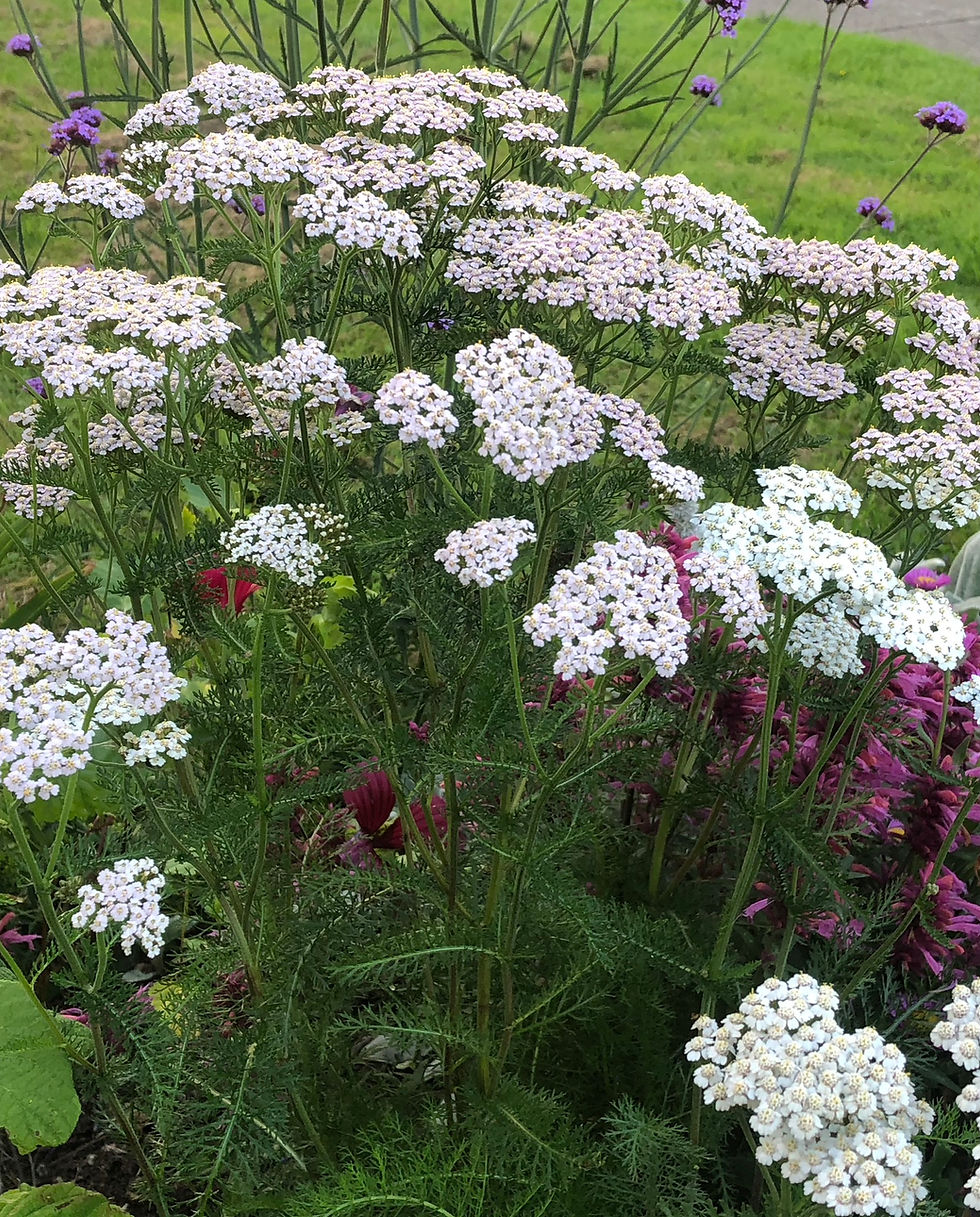
Achillea millefolium (Yarrow)
The flat-topped flower heads of Achillea are a nice contrast to most other flower shapes and they bring a natural feel to the garden.
Tips:
Needs full sun
Drought tolerant once established
Cut back after flowering in autumn or in spring
A good source of nectar for pollinators
So my advice is to ditch the slug pellets and instead focus on plants that slugs and snails won't destroy!
If you’d like advice on choosing plants for your garden, I offer planting scheme designs and garden consultations. I can help you choose plants that suit your garden’s conditions, your preferences and the amount of maintenance you want to do.
Please fill out this form or email me at elaine@plantplanner.ie


