Drought Tolerant Plants for an Irish Garden
Updated: Aug 27
One of the most important gardening principles I’ve learned is that it’s far better to choose plants suited to your conditions than to fight the soil you already have.
Although Ireland gets lots of rain, summers can be dry. Choosing the right plants for your particular conditions can make a big difference, both to how well they grow and how much maintenance they need.
If you’re looking for plants that cope with dry conditions (and still look fantastic and survive an Irish winter), here are reliable choices that perform well in Irish gardens.
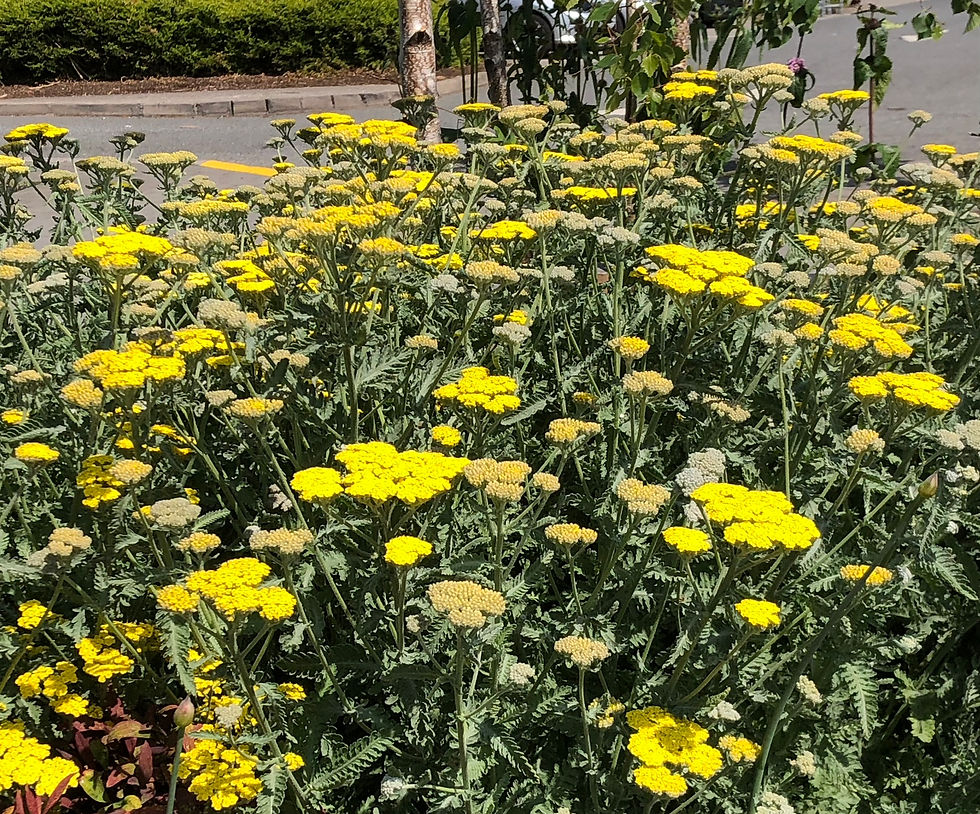
Achillea (Yarrow)
This is classic drought tolerant perennial with flat flower heads loved by pollinators.
Tips:
Needs full sun and free draining soil
Cut back in autumn or spring
Excellent for naturalistic or prairie-style planting

Anthemis tinctoria (Golden Marguerite)
A daisy with fine, ferny leaves. Generally flowers from June to October. Attractive to pollinators.
Tips:
Dead-heading will prolong the flowering period
Performs best in poor, dry soils
Short-lived but self-seeds gently

Cotinus coggygria (Smoke Bush)
A shrub with smoky flower plumes and stunning foliage colour. Grows to 3 metres, but can be pruned to fit into a smaller garden.
Tips:
Likes sun or semi-shade, but the best leaf colour is in full sun
Mediterranean in origin, so dislikes heavy soils
Prune, if required for size, in February or March, just before new growth

Dryopteris affinis (Fern)
Ferns generally like moisture, but Dryopteris is surprisingly drought tolerant once established. This is native to Ireland and commonly found in Irish woodlands. It will stay evergreen (keep its fronds) in mild winters.
Tips:
Ideal for dry shade, a tricky condition
Plant young and water well in the first year
A great choice under trees

Echinops (Globe Thistle)
A striking architectural plant with steel-blue flower spheres. Its long taproots can access water and the spiky flowerheads help prevent water loss. Excellent for bees and butterflies.
Tips:
Native to dry hillsides and meadows of southeastern Europe
Cut back after flowering
Needs sun and sharp drainage

Geranium ‘Rozanne’
This is one of my favourite plants as it is reliable, long-flowering and the bees love its purple flowers. It is one of the longest-flowering hardy geraniums. Geraniums have rhizomes which store water, helping them withstand dry periods.
Tips:
Drought tolerant once roots have established
Good ground cover for borders
Cut back mid-season to refresh growth (optional)

Nepeta (Catmint)
Cats love the aromatic grey foliage of this perennial which makes a lovely front of border plant.
In the above photo, it is combined with the yellow Alchemilla mollis. Nepeta Walker's Low is a particularly reliable variety of the plant. Its hairy leaves reduce water loss.
Tips:
Pollinator friendly
Cut back after flowering at the end of summer for a second flush of growth
Brilliant edging plant for dry borders

Rosemary
Rosemary is a herb which doubles as an ornamental shrub. The prostrate form works very well in planters as it grows over the edges (see photo). Excellent for pollinators and year-round structure.
Tips:
Thrives in dry, free draining soil
Needs full sun
Prune rosemary annually in summer, after flowering, to prevent it becoming leggy

Salvia (various species)
Salvias come in a variety of colours and most will flower until the first frosts in late autumn. Salvias are a little tender so are best grown in the milder parts of Ireland.
Tips:
Deep roots make them drought resilient
Hairy foliage reduces moisture loss
Leave stems over winter and cut back in spring

Sedum (all species)
One of the easiest drought resistant plants available. They can be dug up and split every few years.
Tips:
Succulent leaves store water
Extremely low maintenance
Cut down once a year in late winter

Stachys byzantina (Lamb’s Ear)
Stachys byzantina has velvety silver leaves that glow in sunlight. Its hairy foliage helps prevents water loss.
Tips:
Remove any old leaves at the end of winter
Thrives in poor, dry soils
Does not do well in damp areas

Stipa gigantea
A graceful ornamental grass with light flowerheads giving a translucent feel. Ornamental grasses like Stipa add movement and light to planting schemes and look great over winter.
Tips:
Loves sunny, dry, exposed sites
Minimal maintenance—just cut back to 15cm in February or March
Grows to 2.5 metres, but as it's see through, it looks good anywhere in the border
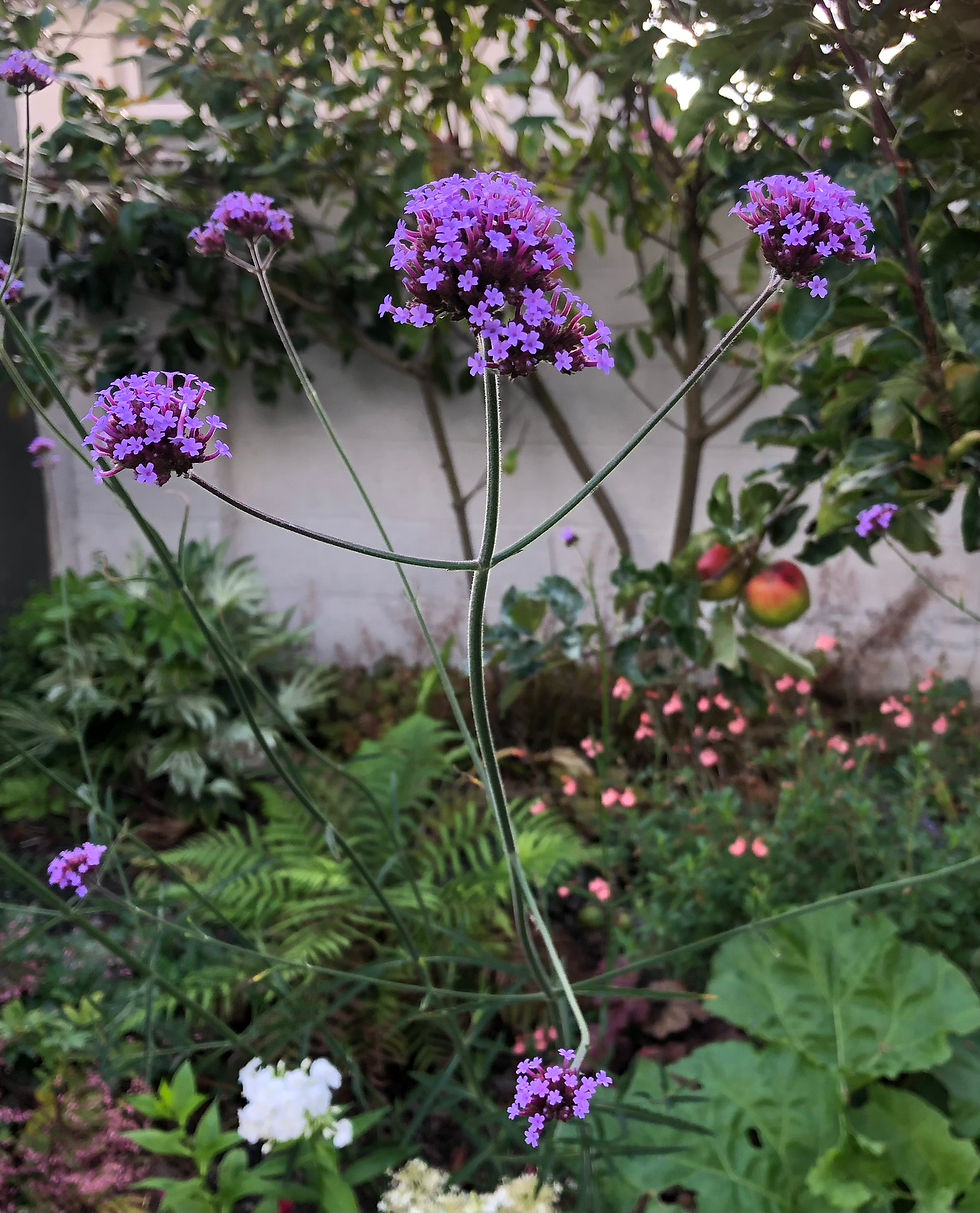
Verbena bonariensis
This is a favourite in modern garden design. It grows to 1.5 metres, but has a translucent feel so can be placed anywhere in the border. Grows easily from seed.
Tips:
Creates a light, translucent effect
Deep roots help it survive drought
Self seeds lightly and fills gaps beautifully

Acanthus mollis
A bold, architectural plant with dramatic leaves and tall flower spikes in summer. Its deep roots help it access moisture.
I wasn't sure whether to include Acanthus in this list due to the difficulty in fully removing it its deep roots. So if you do plant this stunning plant, only plant it where you are sure you want to keep it!
Tips:
Thrives in dry, well-drained soil once established
Also grows well in the shade
Final Thoughts on Drought Tolerant Plants
With drought tolerant plants in the right places, you can create a garden that’s resilient even in dry summers.
It is a good idea to plant between autumn or early spring. This allows roots to establish through winter, so plants are far more resilient when summer dryness arrives.
If you’d like advice on choosing plants for your garden, I offer planting scheme designs and garden consultations. I can help you choose plants that suit your garden’s conditions, your preferences and the amount of maintenance you want to do.
Please fill out this form or email me at elaine@plantplanner.ie


